Galleon 2026Download our mobile shopping application for faster and easy transaction.
Product ID:
1478158
Identifier:
0804738866
Brand:
Stanford University Press
Model:
Shipping Weight:
2.01 lbs
Manufacturer:
Stanford University Press
Shipping Dimension:
11.02 x 8.43 x 0.75 inches
₱20,778
₱11,176
+ ₱ 1,512
Shipping Cost from USA to Philippines inclusive of custom fees.
Cost too high? Check weight and dimension on product details and click "I think this is wrong?" link.
Get it between 2026-04-22 to 2026-04-29.
Additional 3 business days for provincial shipping.
- Price and Stocks may change without prior notice
- Packaging of actual item may differ from photo shown
Cash upon Pick-up - orders grand total must not exceed ₱5,000.00. Order will be pickup at Galleon's Office.
Cash on Delivery - orders grand total must not exceed of ₱10,000.00 and must not exceed ₱5,000.00 for provincial areas. See all payment methods
Used Book in Good Condition
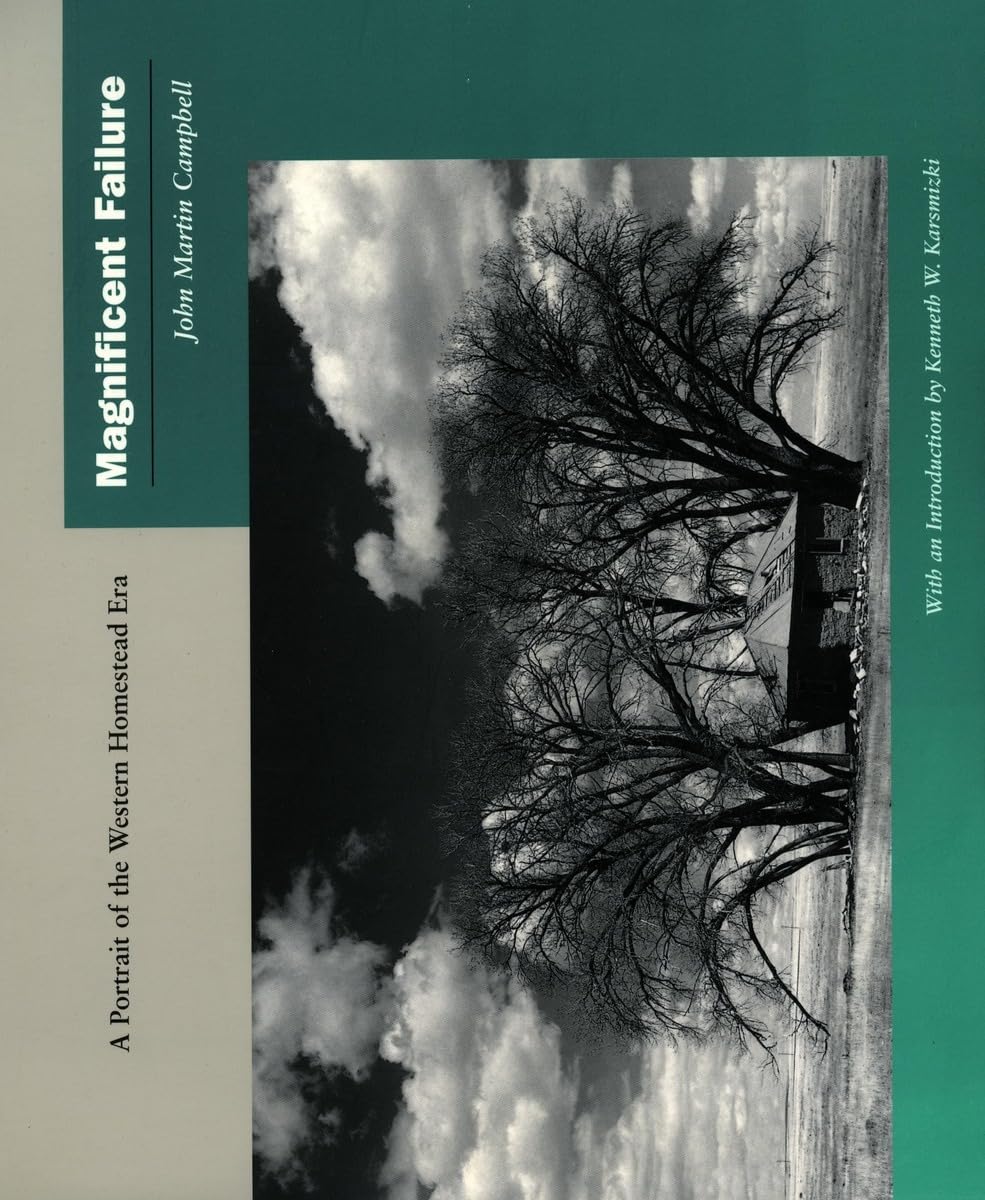
In words that are as clean and precise as his haunting, starkly beautiful photographs, the author vividly recreates the life and times of the Western Homestead Era, that period beginning around 1885 when the prairie lands lying westward from the longitude of the western Dakotas became available to pioneering farmers. Some 70 black-and-white duotone photographs, with detailed captions, record the bleak landscapes and the abandoned farms, outbuildings, farm implements, and hand tools that are mute testimonies to the failed hopes of several million families who settled on these arid and semi-arid lands. The author explains how their failure resulted from a deadly combination of natural and economic causes. Neither the federal government nor the homesteaders themselves were aware that some of the western homestead land was so dry that artificial irrigation often was required. But irrigation was unavailable to most of these farms, and many thousands of them failed within a few years. On most of the homestead lands, however, dry farming―by which crops are watered by falling rain and snow―permitted the newcomers to plant and reap a variety of crops. For several decades, these regions produced flourishing farms, towns, railroad lines, and dirt and gravel roads. Meanwhile, and again unanticipated by both government and the prospering farmers, the climate of these productive regions was becoming increasingly dry. This was the natural phenomenon that culminated in the Dust Bowl of the 1930s, which was coincidentally accompanied by the Great Depression. Crops went begging for lack of water, banks closed, railroads were abandoned, and the formerly prosperous homesteaders went broke by the several millions. Historians of the Western United States have largely ignored the homesteaders. There is little romance in farming, especially when compared with that attached to cowboys, Indians, explorers, and fur traders. Still, the homesteaders were heroes in their own right. Theirs was the last great endeavor in the opening of the West, and this book, with its moving text, historical introduction, and stunning photographs, tells their story.

Buy products not available in the Philippines.


