Galleon 2026Download our mobile shopping application for faster and easy transaction.
Product ID:
498146
Identifier:
0596002556
Brand:
O'Reilly
Model:
9780596002558
Shipping Weight:
3.26 lbs
Manufacturer:
O'Reilly Media
Shipping Dimension:
9.29 x 7.09 x 2.2 inches
₱6,275
₱3,992
+ ₱ 1,764
Shipping Cost from USA to Philippines inclusive of custom fees.
Cost too high? Check weight and dimension on product details and click "I think this is wrong?" link.
Get it between 2026-06-06 to 2026-06-13.
Additional 3 business days for provincial shipping.
- Price and Stocks may change without prior notice
- Packaging of actual item may differ from photo shown
Cash upon Pick-up - orders grand total must not exceed ₱5,000.00. Order will be pickup at Galleon's Office.
Cash on Delivery - orders grand total must not exceed of ₱10,000.00 and must not exceed ₱5,000.00 for provincial areas. See all payment methods
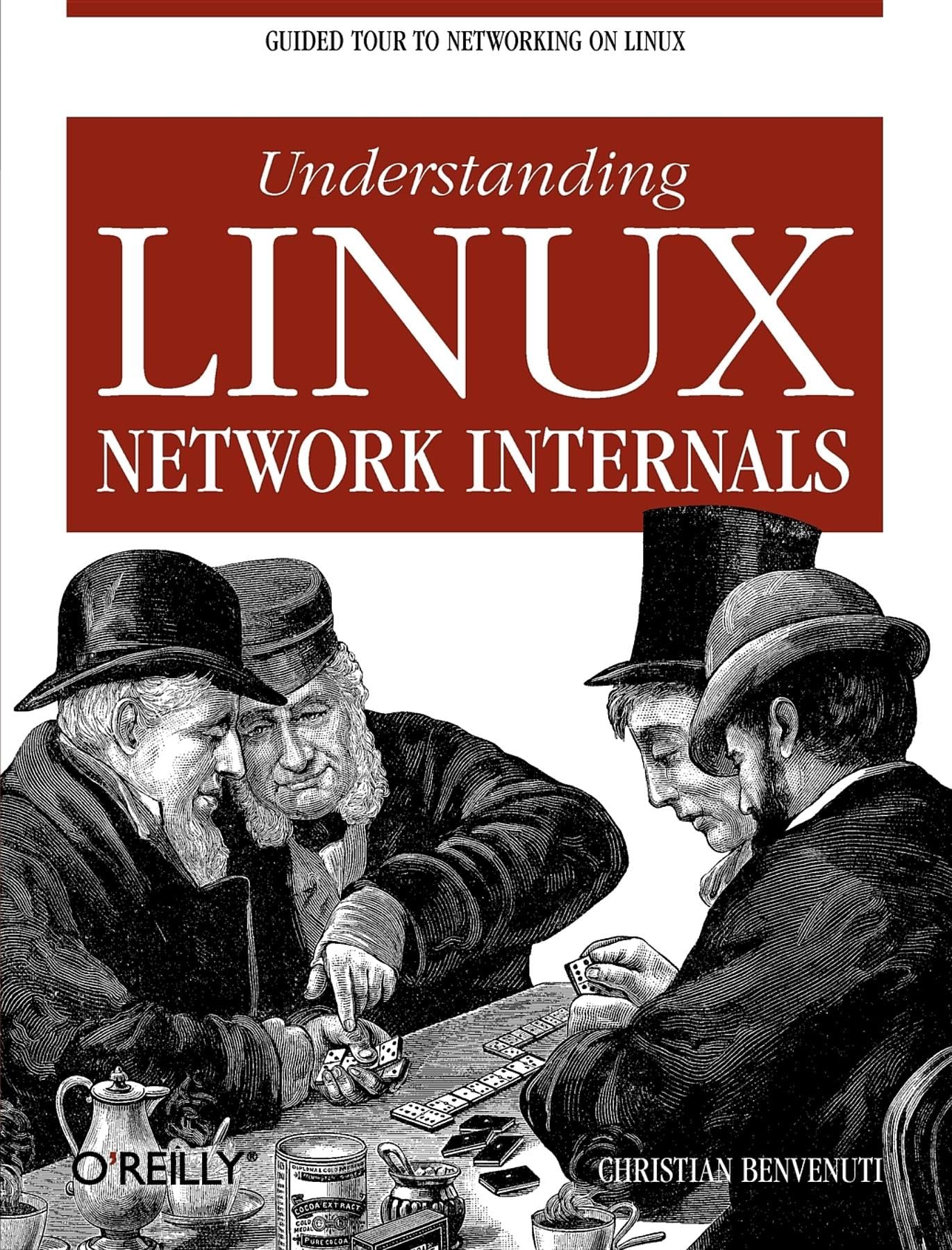
If you've ever wondered how Linux carries out the complicated tasks assigned to it by the IP protocols -- or if you just want to learn about modern networking through real-life examples -- Understanding Linux Network Internals is for you. Like the popular O'Reilly book, Understanding the Linux Kernel, this book clearly explains the underlying concepts and teaches you how to follow the actual C code that implements it. Although some background in the TCP/IP protocols is helpful, you can learn a great deal from this text about the protocols themselves and their uses. And if you already have a base knowledge of C, you can use the book's code walkthroughs to figure out exactly what this sophisticated part of the Linux kernel is doing. Part of the difficulty in understanding networks -- and implementing them -- is that the tasks are broken up and performed at many different times by different pieces of code. One of the strengths of this book is to integrate the pieces and reveal the relationships between far-flung functions and data structures. Understanding Linux Network Internals is both a big-picture discussion and a no-nonsense guide to the details of Linux networking. Topics include: Key problems with networking Network interface card (NIC) device drivers System initialization Layer 2 (link-layer) tasks and implementation Layer 3 (IPv4) tasks and implementation Neighbor infrastructure and protocols (ARP) Bridging Routing ICMP Author Christian Benvenuti, an operating system designer specializing in networking, explains much more than how Linux code works. He shows the purposes of major networking features and the trade-offs involved in choosing one solution over another. A large number of flowcharts and other diagrams enhance the book's understandability.

Buy products not available in the Philippines.